
The standard launch runs to a familiar script. Invitations go out, guests arrive to canapés and a speech, a cloth comes off a product on a plinth, and everyone heads home. Six weeks later, the product reaches the shelves, and most of the room has moved on.
A product launch event tends to get judged on the reveal. The reveal lasts a few seconds. What decides whether a launch lands is everything built around it: who is in the room, why they came, what they did with the product, and whether they could buy it the following week. The best launches treat each of those as a design decision. That is what building a launch as an experience means in practice, and it brings the logic of how activations earn participation to the moment a product first meets its market.
What Is a Product Launch Event?
A product launch event is a live experience designed to introduce a new product to the people best placed to spread it. That audience might be media, trade buyers, early customers or the brand’s own sales team, and each wants something different from the night.
A launch event sits inside a wider product launch strategy, alongside positioning, pricing, distribution and paid media. Its job within that plan is specific. It gives the first people to meet the product a reason to talk about it, which is why a well-planned launch activation is designed around the audience rather than the announcement.
Why Launches Carry More Weight in a Small Market
New Zealand’s media, trade and hospitality communities are small and closely connected. In our experience, buyers move between retailers, and the journalists covering food and drink tend to know each other and the people pouring. A launch’s reputation travels quickly in that environment, in both directions.
That matters most for brands arriving from overseas. A label can be a household name in Sydney or Melbourne and have almost no profile here, which means its brand launch event is often its first impression. For many of those brands, it also has to do the work of an advertising budget they have not yet committed to the New Zealand market.
Get the launch right, and the market does some of the talking for you. Get it wrong, and the market remembers that too.
How to Plan a Product Launch Event
Most lists of product launch event ideas start with the format. Five decisions, all made before the invitations go out, matter more: who the launch is for, what gives people a reason to come, how they get in, what the product does on the night, and when people can buy it.
Decide Who the Launch Is For
Media want a story. Trade buyers want confidence the product will sell. Early customers want to be first, and the brand’s own sales team want something to talk about on their next call. One night can serve more than one of those groups, but it can only be designed around one, and the launches we see struggle are usually the ones that tried to serve all four equally. Choose the audience that matters most to the launch’s commercial goal, build the experience for them, and let everyone else benefit from it.
Give People a Reason to Come Beyond the Product
A new product is rarely a story on its own, however good it is. A collaborator, a venue or a borrowed piece of credibility gives guests and media something to talk about, and when it is chosen well, it attaches that conversation to the product. The test is simple: would the people you want in the room still come if the product were kept secret until they arrived?
Make Getting in Part of the Launch
The launch starts with the invitation. Limited capacity, ticketed entry and a clear sense that not everyone will get in build anticipation before anyone arrives, and anticipation is where word of mouth begins. The scarcity has to be real. A sold-out night that reappears a month later as a free tasting tells the market the first one was never exclusive.
Build the Night Around the Product
Once the cloth comes off, the product needs a job for the rest of the night. Guests should be tasting, handling or using it, because people remember what they do far better than what they are shown. A product that spends the evening on a plinth has been introduced. A product people have held has started to sell.
Launch When People Can Buy
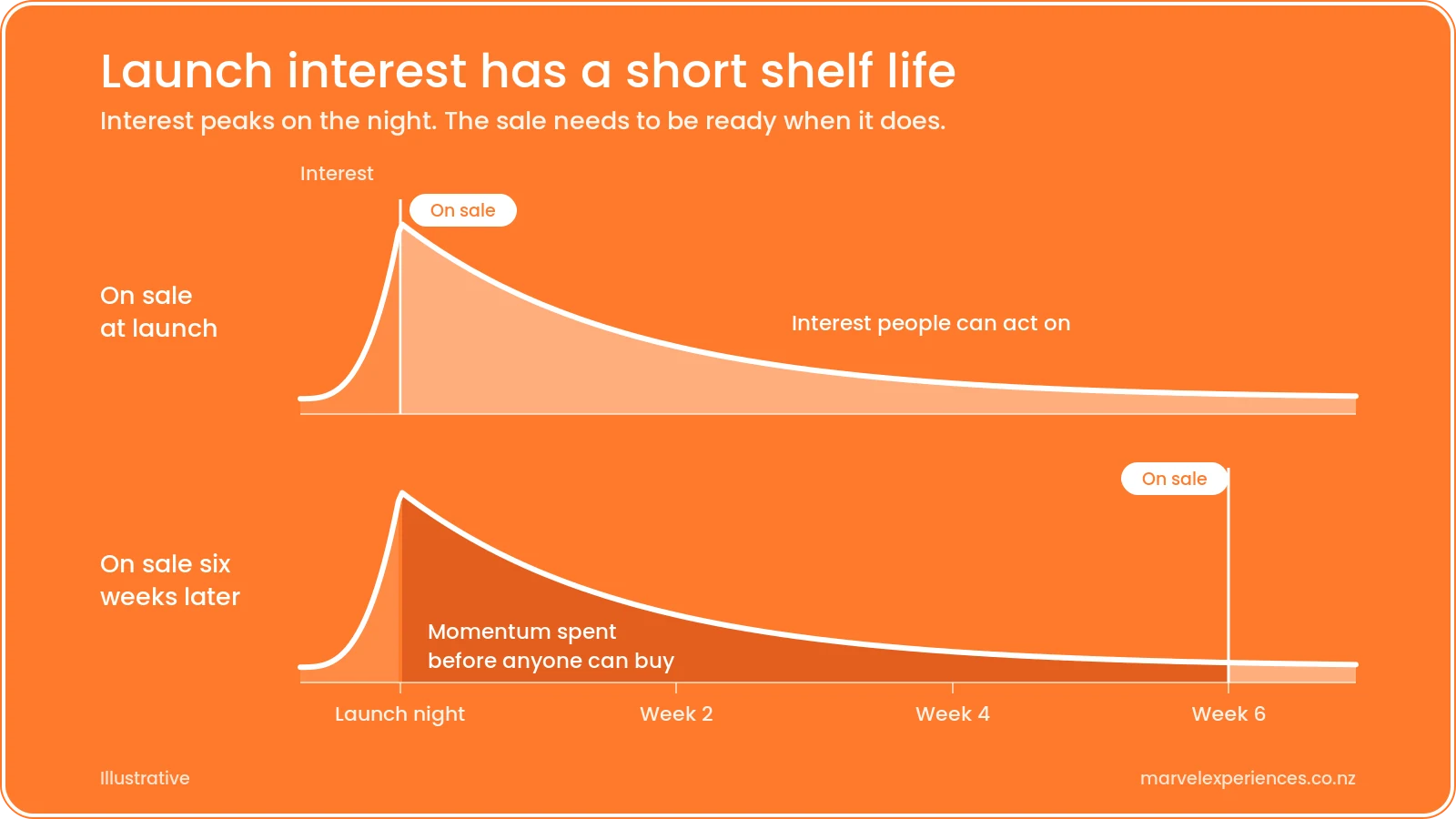
Interest from a launch fades quickly. If the product is not yet in stores, on wine lists or in the sales team’s hands when people start talking about it, the launch spends its momentum before anyone can act. Align the date with distribution, brief the sales team before the night, and make the next step obvious to everyone who leaves. That coordination is as much a part of event management as the night itself.
How Squealing Pig Launched into New Zealand
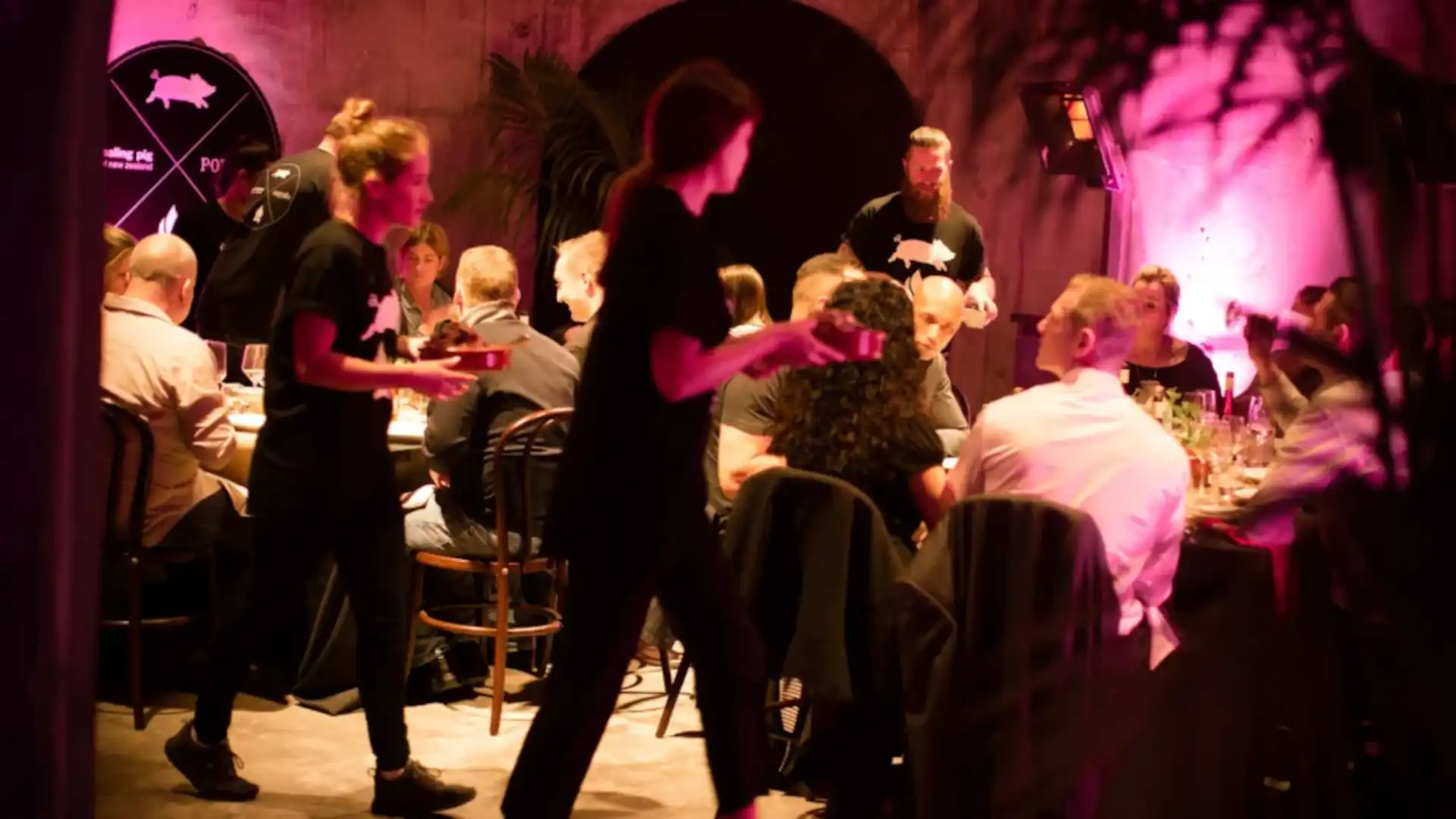
Squealing Pig arrived with a quality wine and almost no profile in New Zealand. The brief was clear: create a moment the media could not ignore, and guests could not stop talking about, without a big advertising budget. The conventional route would have been a trade tasting, which reaches buyers and very few others, or an advertising burst the brand could not justify for a market it was only just entering.
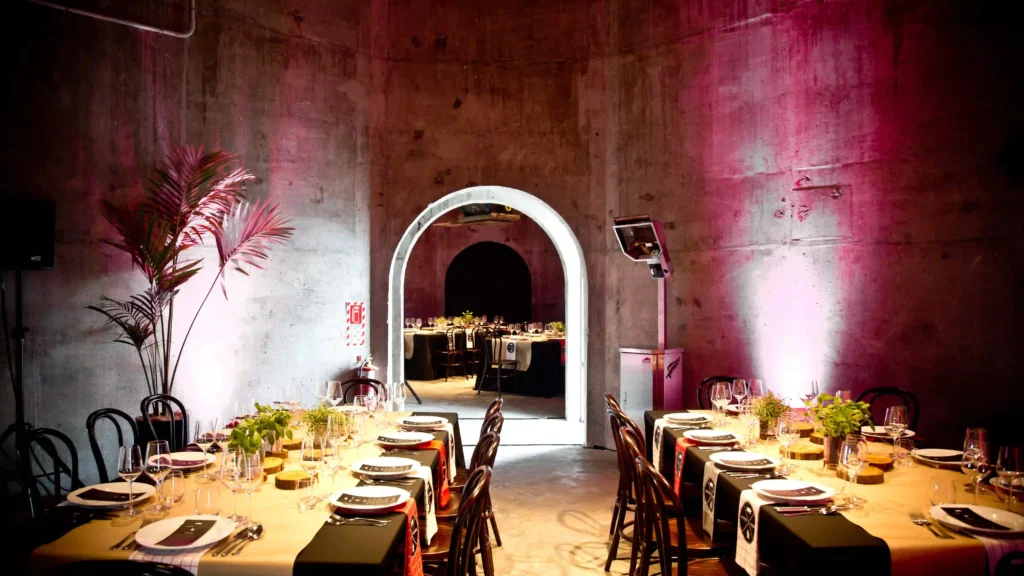
Marvel built the launch as an exclusive two-night pop-up restaurant inside The Silos on Auckland’s Viaduct, and three of the five decisions are visible in it. The audience was media, influencers and paying guests. The reason to come was the kitchen, with chefs from Sydney’s acclaimed Porteño giving media a story before they had tasted the wine. Capacity was limited to keep the nights rare; every ticket sold, and demand and word of mouth were building before the doors opened. The Silos gave both nights instant visual drama.
The coverage that followed carried Squealing Pig well beyond the two nights and the people who attended them. The room was small, and the conversation it started was much bigger. It remains one of the clearest examples of how we approach activations for a launch.
Planning a Launch That Lands
A launch has one chance to introduce a product, and most of what decides it happens weeks before the night. If you are launching a product or bringing a brand into New Zealand and want that first impression to carry, start a conversation with us, or look through the launches and activations we have delivered.