
The part of an activation nobody photographs is the skip behind it. A custom build goes up on the Thursday, works beautifully across a weekend, and is in a bin by Monday morning: plywood, vinyl, printed panels, all of it. That has been the standard economics of live brand work for a long time, and it is quietly expensive as well as wasteful.
Zero waste events tend to get discussed as a design choice, something solved with recycled materials and a well-placed compost station. Most of the footprint is decided much earlier, in the build specification and the freight schedule.
Why Sustainability Should Now Show Up in the Brief
Sustainability used to sit near the back of a client deck as a values statement. It now arrives in briefs as a requirement with evidence attached, and the pressure has come from two directions at once.
Larger organisations report on their own emissions and waste, which pulls their suppliers into that reporting. An agency that cannot say what happened to a build after pack-down leaves a gap in someone else’s disclosure, and procurement teams have started asking the question up front. Consumer expectation has moved the same way, and consumer patience has not kept pace with it. Most people have noticed brands talking more about sustainability, while only one in five believe those claims are accurately represented.
Where Does the Waste Come from During a Live Event?
Reducing waste starts with knowing which parts of an event produce it. In experiential work, three areas account for most of the total.
- The Build: Custom structures are specified for a single campaign, with fixings, finishes and dimensions that suit one site and one layout. Anything built that way has nowhere to go once the campaign ends.
- The Freight: New Zealand geography makes transport a larger share of the footprint here than most overseas guidance assumes. A nationwide tour covers two islands and a ferry crossing, and every additional truck movement carries emissions and cost in the same measure.
- The Giveaway Table: Branded merchandise and printed collateral get ordered in volume, distributed in part, and disposed of in bulk. The leftovers usually spend a few years in a storage unit before reaching the same landfill they would have reached on day one.
How to Run a Zero Waste Event Without Compromising the Experience
Sustainable event management works when it is treated as a production discipline rather than a creative one. Five decisions carry most of the outcome.
Design for the Second Use
Specify the build in modules that can be reconfigured for another site, another format, or another campaign entirely. A structure designed to come apart cleanly and travel well will get used again, which removes the waste and the rebuild cost together.
Source Close to the Site
Local suppliers cut freight distance, shorten lead times, and put people on the ground who already know the venue and the council requirements. This is one of the few sustainability decisions that improves the delivery as much as the footprint.
Choose Materials You Can Account For
Materials that can be re-milled, re-skinned or returned to a supplier hold their value after the event finishes. Where each component goes at pack-down belongs in the design phase, settled at the same time as how it gets built.
Measure It or Leave It Out of the Story
Record the practical numbers: how many locations one build served, what proportion of the structure was reused, where the waste went. A brand that publishes a figure it can defend earns far more credit than one making a broad environmental claim, and audiences have become quick at telling the two apart.
Plan the Waste Before You Apply for the Permit
Any event on Auckland Council land needs a Waste Management and Minimisation Plan under the council’s bylaw, submitted with a site plan showing where the waste stations sit and how many bins each one holds. Building that document alongside the site design, well ahead of the application deadline, is what turns a diversion target into something achievable on the day.
What a Sustainable Brand Experience Looks Like in Practice
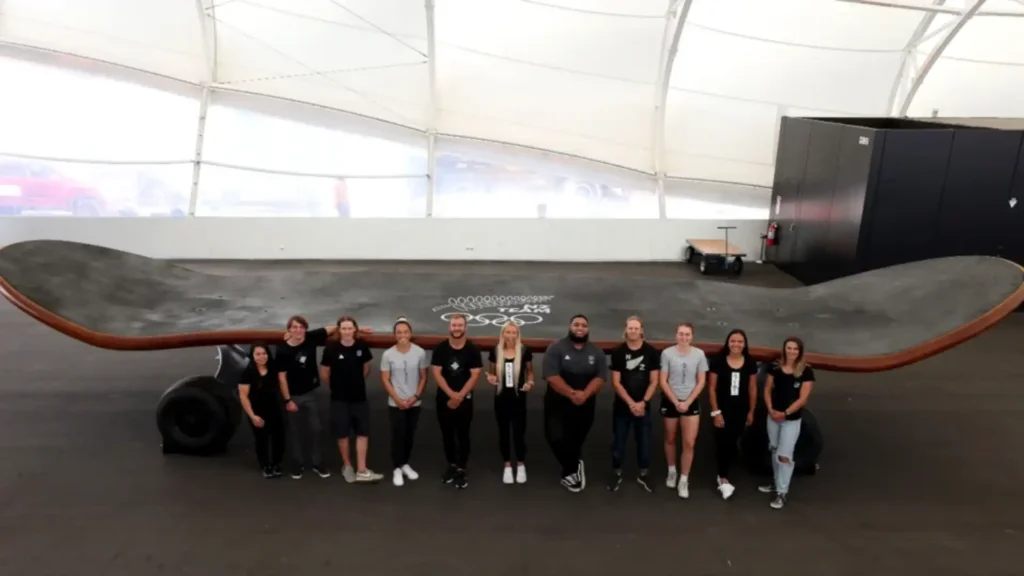
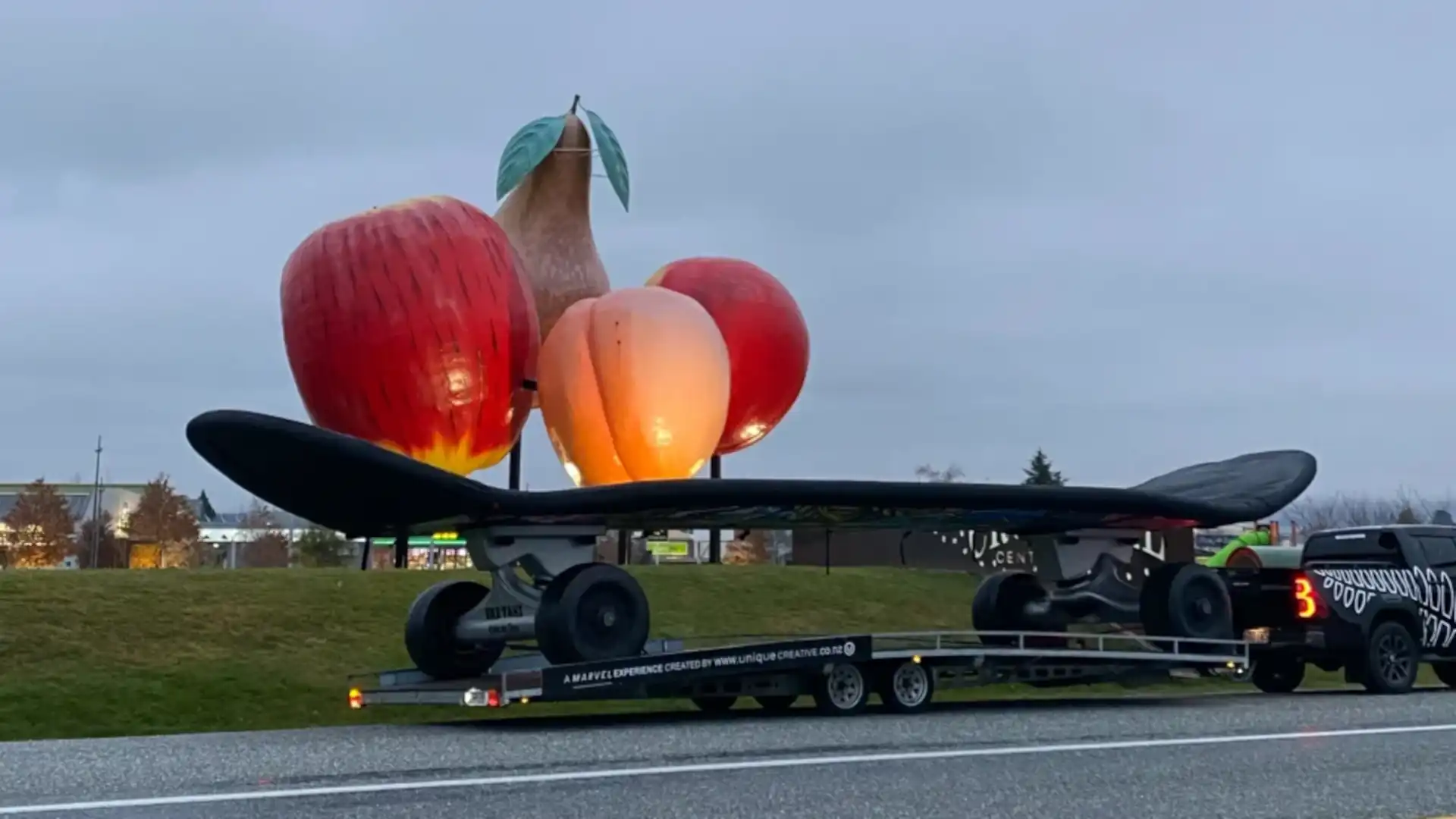
When the New Zealand Olympic Committee needed to build awareness of skateboarding ahead of Tokyo, we constructed a fully authentic 12-metre by 3-metre skateboard, every layer built as it would be on a real board, and toured it for 40 days through schools, skateparks, surf beaches and landmarks across the country.
The brief was about reach and attention. The shape of the campaign happened to be the lowest-waste way to deliver it. One build served dozens of communities across six weeks, where a conventional approach would have specified separate installations in each main centre, each one built, freighted and disposed of on its own schedule. The same logic applied to the portable shot put arena we toured nationwide for the Commonwealth Games.
Touring a single asset well is a logistics problem before it becomes an environmental one. It depends on production planning that treats freight, permits and pack-down as design inputs, and on event delivery that holds the standard consistent across every location on the schedule.
Build Something That Outlasts the Campaign
Marvel Experiences designs and delivers brand activations and live events across New Zealand, with production, freight and compliance managed as part of the same process. If sustainability requirements are sitting in your next brief, start a conversation, and we’ll work through what is achievable inside your budget and timeline.