
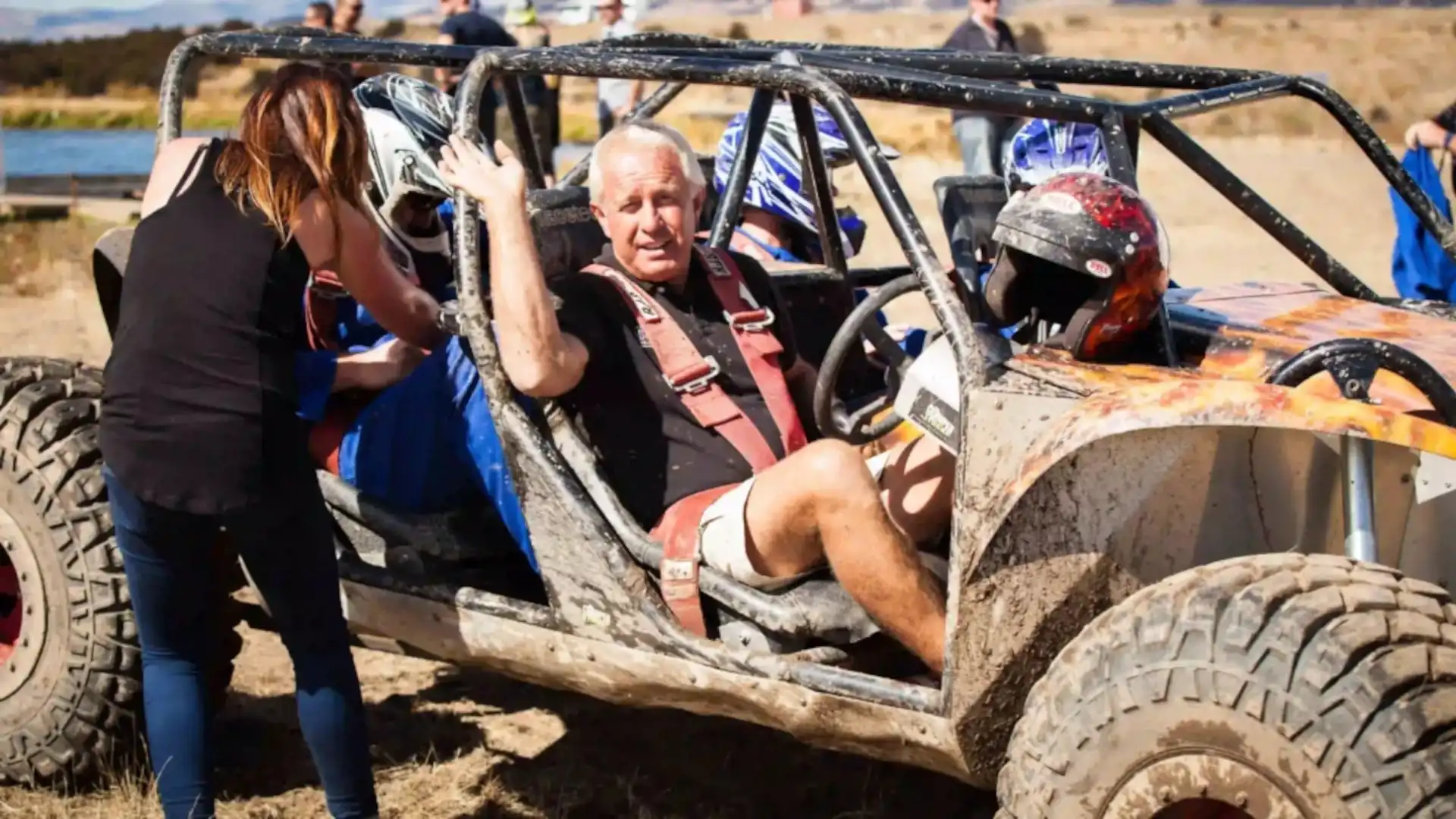
Ask someone about a brand event they went to last year, and they will describe one moment, usually the best one, and then how the day finished. The hours in between rarely come up.
Creating memorable brand experiences tends to get discussed as a question of the big idea. The idea matters. Most of what people keep, though, gets decided in production: where the high point sits, how the experience ends, and where the waiting happens. The case for why brand activations earn participation is already well made. This piece picks up after someone has agreed to take part, and looks at which parts of the next few hours they will still be able to describe a month later.
What Makes a Brand Experience Memorable?
A memorable brand experience is one people can recall and describe weeks afterwards. It is built around a small number of designed moments rather than an even standard across the whole event, and that second part is where most planning goes wrong.
Two findings from memory research explain why. The enactment effect shows that people remember what they did far better than what they watched. The peak-end rule shows that they judge an experience by its best moment and its final one. Both apply to anything a brand builds for people to walk into, from a festival bar to a three-day stakeholder programme, and both shape how we approach brand experiences from the first planning meeting.
What people remember is also what they repeat. A story told by a guest travels further than anything a brand says about itself, which is why what makes an activation feel authentic matters as much as what it looks like.
Why Some Experiences Stick and Others Fade
Memory keeps very little of a live experience, and what it keeps is predictable.
People Remember What They Did
Memory researchers call it the enactment effect. A 2022 meta-analysis covering 183 studies found that physically performing an action produces better memory than reading about it or watching someone else do it. The researchers traced most of that benefit to planning the action, with the movement itself adding the rest.
The planning part is the useful detail for anyone designing for brand recall. A guest who has to work out how to do something is laying down a stronger memory than a guest who is shown how it is done.
People Remember the Peak and the End
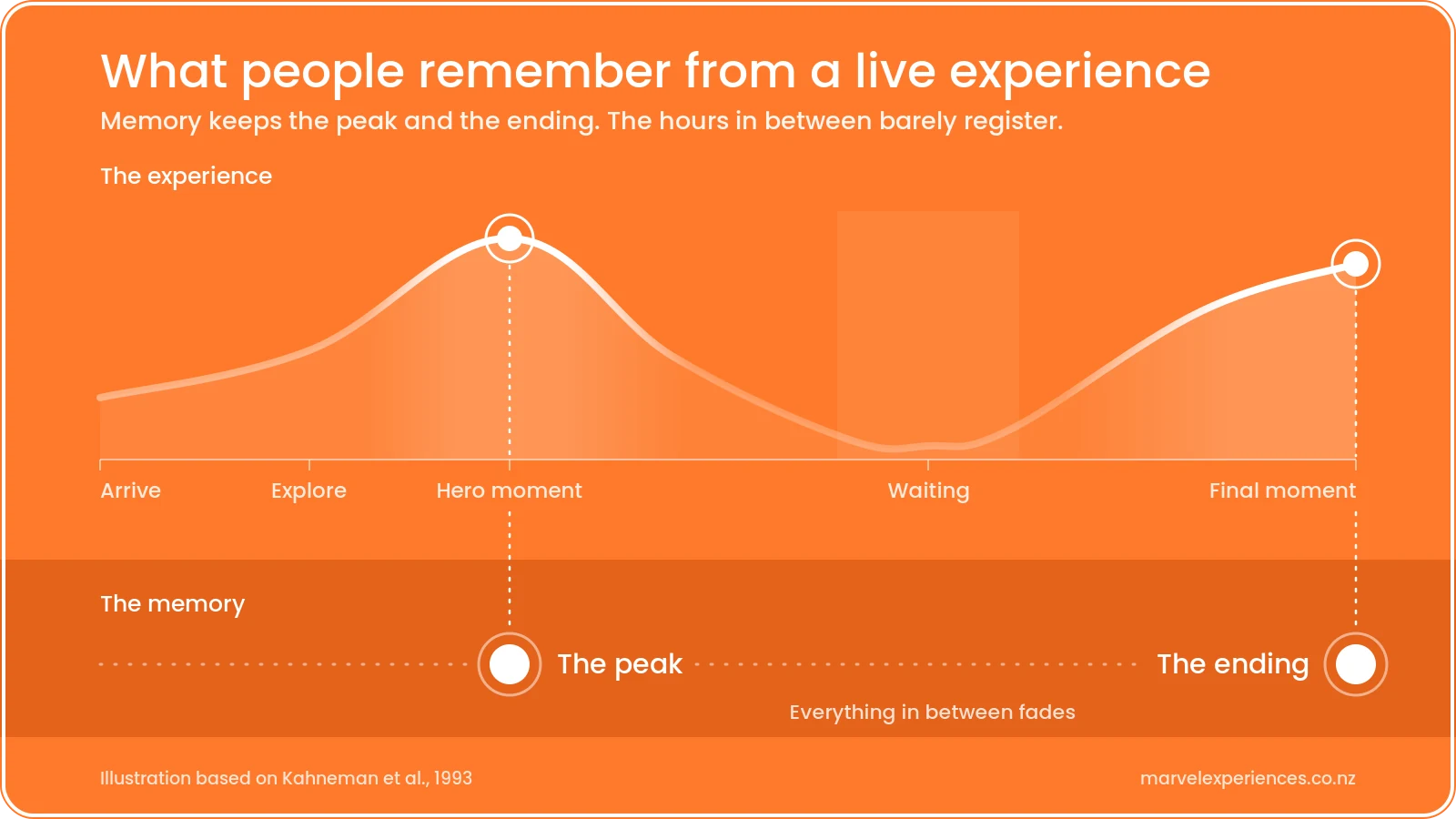
Psychologists call it the peak-end rule. In a 1993 study led by Daniel Kahneman, participants held one hand in cold water for 60 seconds and the other for 90, with the final 30 seconds slightly less cold. Most chose to repeat the longer trial. Their memory was shaped by the worst moment and the last one, and the extra 30 seconds barely registered. Later studies found the same pattern in pleasant experiences. For live work, that means a four-hour activation is remembered through two moments. A day that is consistently good everywhere gives memory nothing to hold on to, which is why so many competent events blur together.
How to Create a Memorable Brand Experience
Once memory is understood as selective, the planning changes. Five decisions do most of the work: choosing one peak, putting it in the guest’s hands, designing the ending, keeping friction away from the start and finish, and giving people something to carry home.
Design One Peak and Protect It
Spread the budget evenly, and every part of the day improves slightly while nothing becomes the part people describe. Choose the moment the whole experience is built around, then protect it with time, money and the best people on site. Programmes packed with activities look generous on paper and flatten out in memory.
Put the Peak in the Guest’s Hands
The high point should be something guests do. Cooking, building, competing, pouring, choosing: anything that asks them to plan an action gives the enactment effect something to work with. For the New Zealand Olympic Committee, we toured a portable shot put arena that invited the public to throw. Dame Valerie Adams’ and Tom Walsh’s distances were marked on the field, so every participant could measure their own throw against the world’s best.
Move the Waiting Away from the Start and Finish
Every live experience has friction somewhere: registration, security, transport, the wait for a bus back to town. Under the peak-end rule, where that friction sits matters as much as how long it lasts. A slow moment in the middle fades. A forty-minute wait for transport home becomes the ending. At Red Bull Cliff Diving, VIP guest management ran from arrival through to departure. The zone was laid out around sight lines to athletes diving from 27 metres, so the peak was visible from the best seats in the house. Decisions like that sit in the logistics and production plan long before anyone arrives.
Decide How It Ends Before You Decide How It Opens
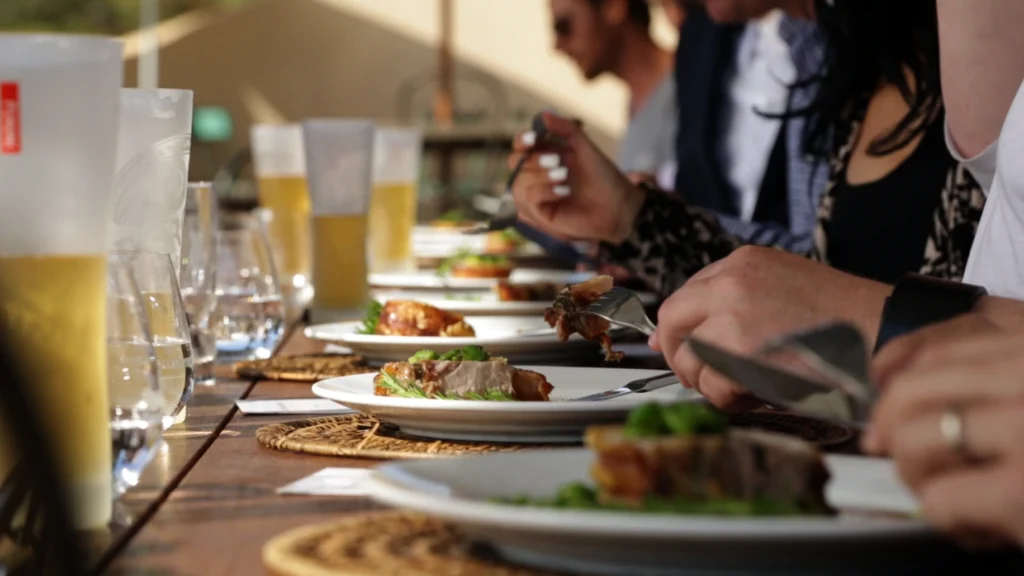
Most planning energy goes into the arrival. Endings tend to happen by default, with the bar closing, the lights coming up, and a queue for coats, and that default is the moment memory weighs most heavily. Peroni’s Tour de Waiheke took twelve influencers across the island on branded Vespas. The day finished at Poderi Crisci with a curated journey through Italian food, closing on the brand’s own heritage.
Give People Something to Carry Home
A memory needs a way back. Sometimes that is an object, like the personalised hand-painted helmet each Tour de Waiheke guest was given. Sometimes it is a sentence, one simple enough to repeat to someone who wasn’t there. Either way, the thing people take home is what keeps the experience alive after pack-down.
What a Designed Peak Looked Like for Matua in Queenstown
For Matua’s 40th birthday, the brief was a three-day programme for 80 stakeholders in Queenstown, with the kind of moments people tell stories about afterwards and without over-programming the guests. The easy version fills every hour, on the theory that more activity means more value.
Marvel built the three days around a single centrepiece instead. The programme opened with a pōwhiri at AJ Hackett, which set the tone for everything that followed. A wine tour connected guests to the product. The peak was a DIY hāngī challenge with Simon Gault, hands-on and collaborative, with guests doing the work themselves. A session at Oxbow gave people room to talk between the high-energy moments, so the peak had space around it.
Transport, accommodation, staging, cultural elements and catering were managed across all three days so that none of it interrupted the moments that mattered. The decisions that shaped the programme were about what to leave out, and they were made long before anyone landed in Queenstown. It is the same approach we bring to every corporate experience.
Designing the Moment People Take Home
Every experience ends somewhere, planned or otherwise. The brands people remember are the ones that decided where. If you are planning a brand experience anywhere in New Zealand and want to know which moment it should be built around, start a conversation with us, or look through the work we’ve delivered.